
Watering and feeding indigenous plants
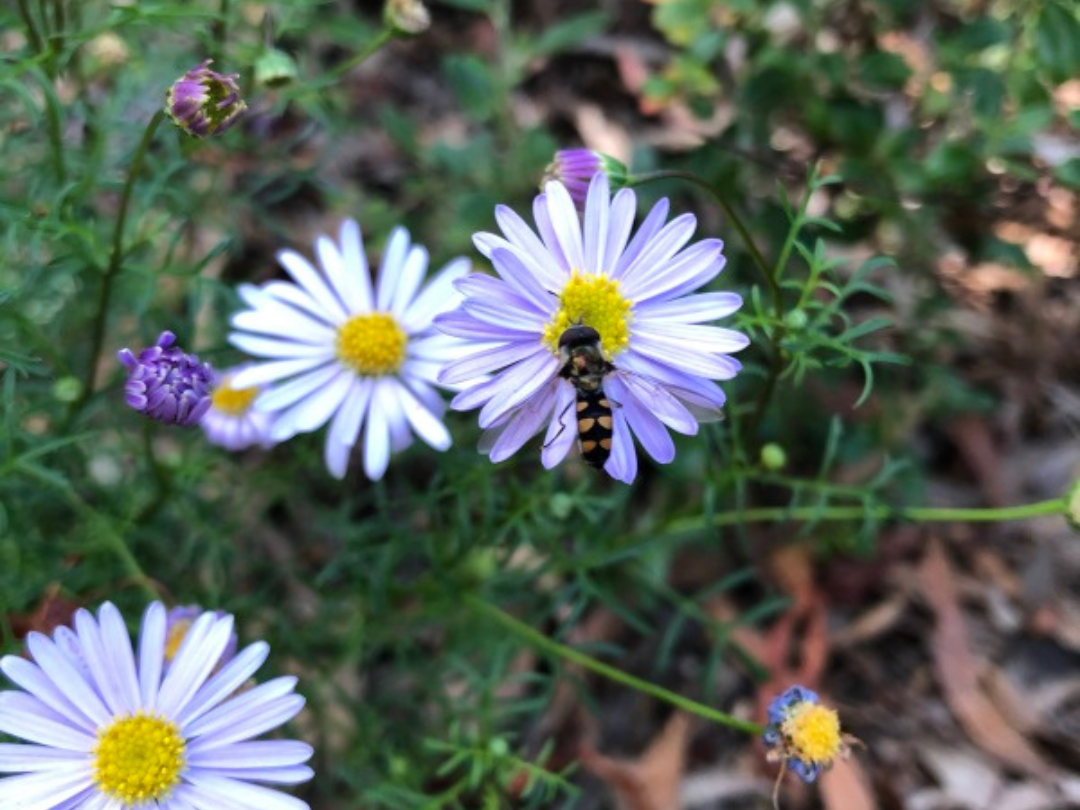
A common assumption about indigenous plants is that once they’re in the ground, they’ll look after themselves. While it’s true that local plants are generally tougher and lower-maintenance than many exotics, they’re not completely hands-off—especially at the start.
Water is essential during establishment
When indigenous plants are first planted, their roots are shallow and vulnerable. Species like Kangaroo Grass (Themeda triandra), Hop Goodenia (Goodenia ovata) and Sweet Bursaria (Bursaria spinosa) all need regular watering for their first one to two summers. Deep, infrequent watering encourages roots to grow down into the soil, where moisture is more reliable.
Once established, most local plants cope well on rainfall alone. Extra watering is usually only needed during extended dry periods, heatwaves, or for plants in exposed, full-sun positions.
The exception to this is if they are in pots. Potted plants, indigenous or not, are completely dependent on rainfall and you for water as they cannot tap into water further below the surface like plants in the ground. You’ll need to regularly water any plant in a pot if it hasn’t rained (substantially) recently.
Fertiliser is rarely necessary, and often unnecessary
Many indigenous plants evolved in low-nutrient soils and can struggle if given too much fertiliser. High-phosphorus products can harm species such as Banksias and Grevilleas. In most cases, regular fertilising does more harm than good.
Instead, focus on soil health. Organic mulch—wood chips, leaf litter or bark—retains moisture, protects soil life and slowly releases nutrients in a way plants are adapted to use. A thick mulch layer can dramatically reduce the need for both watering and fertiliser.
If extra support is needed, a diluted seaweed solution can help improve root growth and stress tolerance, especially during establishment or extreme weather. Compost is best used as a light surface top-dressing under mulch, rather than dug into planting holes, to avoid creating overly rich conditions.
Once established, an indigenous garden should need less water, fewer inputs and less intervention overall—while offering far more resilience, habitat value and long-term ecological benefit.
Written by Jen Willis