Why handling tomato stems is a bad idea
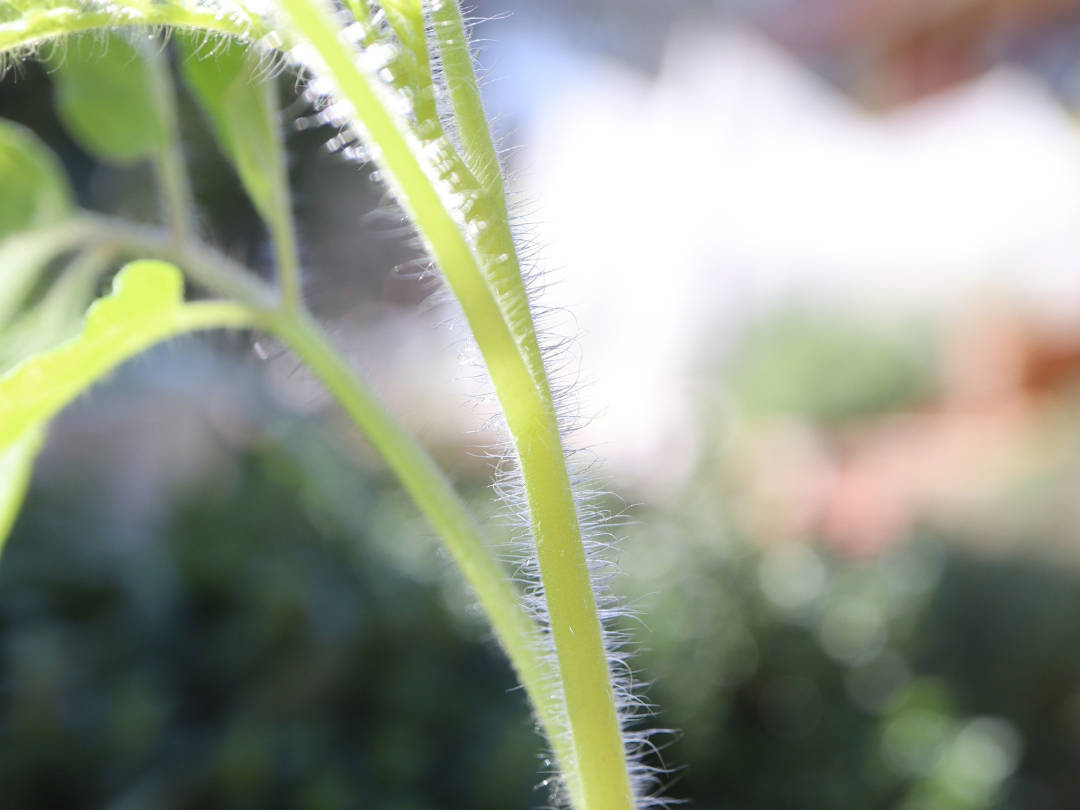
Tomato stems, if you take a close look, are covered in very tiny hairs. They are called trichomes. Trichomes are important in providing a protective structure that helps plants survive and adapt to their environment including deterring insects, moderating extreme temperatures and preventing water loss. Touching the stems disrupts these processes.
There are 2 forms of trichomes: glandular and non-glandular and they have different functions.
The glandular form exudes a sticky, toxic substance from the hair tip when touched which is intended to deter insects from eating the stem or laying eggs on the stem or introducing pathogens. Insects can actually become trapped in the stickiness. This toxic substance may be in the form of an oil, resin, volatile terpene or other chemical and will change depending on the needs of the plant. Bruising the stem releases that strong tomato plant smell caused by these agents. And it produces that sticky yellow substance that coats your hands after working with tomato plants.
The longer, non-glandular hairs help cool the plant through movement and reflection of sunlight, and protect it from sunburn. They also help prevent water loss. This is very important as tomatoes need very hot weather to ripen their fruit and therefore should be planted in full sun in one of the hottest parts of the garden. This brings its challenges for the plant and the non-glandular hairs answer these through their protective functions.
A further reason not to handle the stems of tomatoes or other seedlings is that if you squeeze too hard and bruise the stem, the stem will die and so will the plant. Hold the leaves gently when potting or planting, lower the plant into the soil and backfill. If you damage a leaf, it will grow another but once the stem is damaged, that’s it for the seedling.
Do trichomes turn into roots? No, they don’t. To create more roots along the stem, bury the stem deeply (just leave the top 2 pairs of leaves above the ground) and roots will emerge from the stem called adventitious roots and these allow the plant to take in more water and nutrients, and in turn it will produce more flowers and fruit, and be more stable in the ground.
Take care when pruning laterals out or cutting back branches. Use sharp secateurs and make a s few cuts as possible. A clean wound will enable the wound to heal over quickly, reducing the time that the plant is open to infection.
Written by Robin Gale-Baker