
EV Myths
This article is an update of one I wrote in 2023.
In the 4 years I have had an EV, I have driven 74,000 km and only needed 2 services (both free) and 2 new tyres. I have never regretted the decision to purchase my EV. However, despite the current crisis in the
Middle East many people still have concerns about making the change.
Misconceptions and misunderstanding about EVs persist and the infamous “end the
weekend” line from the previous government still colours the perception some
people have of zero emission vehicles. As the need to reduce vehicle emissions is
clearer than ever before, it’s time to dispel the myths.
EVs lack power
‘Aren’t they slow to get away at the lights?’. I rarely hear this question these days.
By now, most people are aware that electric motors have substantially more torque
than internal combustion motors, so EVs accelerate instantly. The simplicity of
electric motors, and the lack of gears, means the power is applied to the wheels
more directly. Think about how home appliances with electric motors operate and
you’ll get an idea. For petrol heads, check out one of the YouTube videos comparing
the two types of vehicle.
Aren’t they hard to stop?
Quite the contrary. Lifting the accelerator turns the motor into a generator, meaning the
wheels have to turn the motor, rather than the other way round, assisting in stopping as
well as adding charge back into the battery. The brakes also come on after the initial
slowing, giving EVs very substantial stopping power. If you use ‘one pedal driving’ mode,
the brake pedal is hardly used, with the motor doing most of the stopping. A benefit of this
is reduced tyre and brake wear.
You could run out of battery
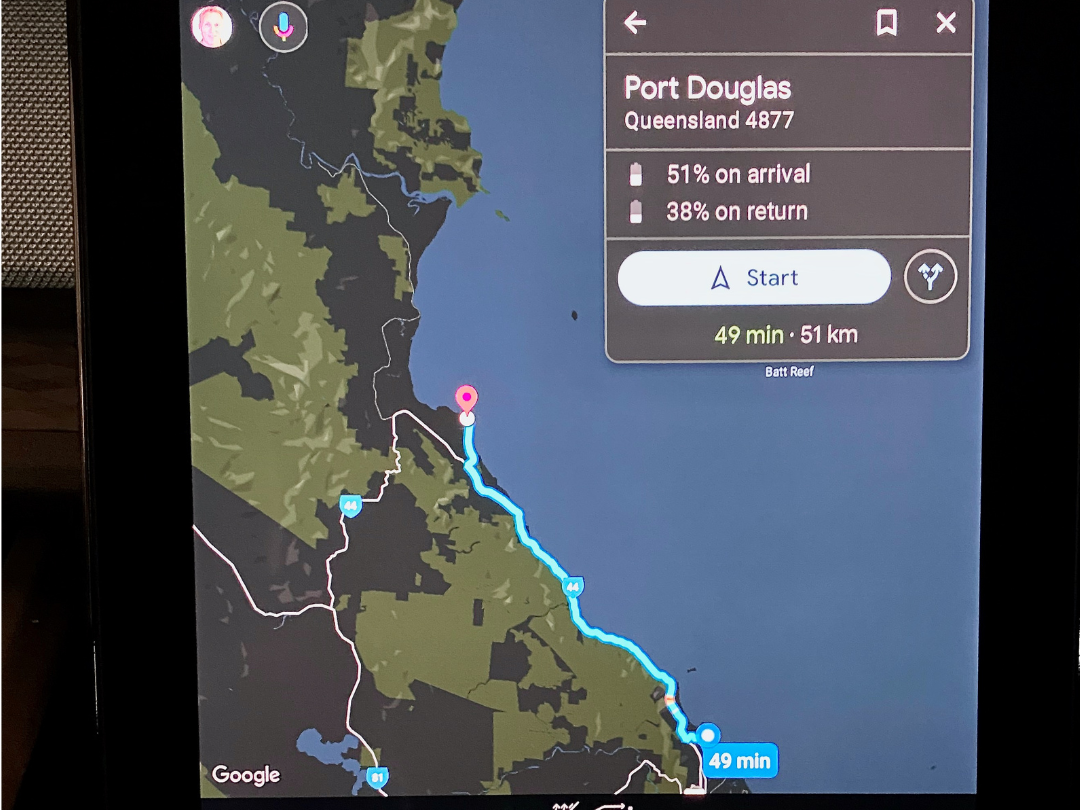
‘What do you do when you run out of battery?’ Answer: plug the car in anywhere there is
an electrical outlet. And there are more electrical outlets than petrol stations. EVs also
have extremely accurate computer systems which predict the level of battery charge at the
destination and can suggest charging stations along the way, so it is easy to plan your
recharge.
It takes forever to recharge an EV
If you plug in to your standard domestic power socket, your car can easily charge
overnight at off-peak rates. Many owners upgrade to faster 32A outlets for home use,
making for speedier charging. Public chargers are usually quicker and more fast chargers
are being installed, especially near shopping centres, so you can plug in while doing the
shopping.
You have to charge them 3 times a day
Highway travel means you are likely to stop once or twice, depending on the length of the
trip, giving you time for a coffee and lunch. With a range of around 300-400km for most
EVs, urban driving will often need little more than once-a-week public charging. There are
now EVs with over 800km of range.
EVs are no better for the planet than internal combustion engine (ICE) vehicles
A lot has been written (and said), about ’embodied energy’ and charging EVs on a
primarily coal-fired electricity grid, to imply that EVs may be no better (and possibly worse),
than ICE vehicles for sustainability.
In fact, research is clear that taking all factors into account, EVs come out as significantly
better for the environment than ICE vehicles. Rather than go into detail here, I suggest you
read the Which Car report on this: [https://www.whichcar.com.au/advice/how-sustainable-
are-electric-cars] and also the Carbon Brief factcheck here:
[https://www.carbonbrief.org/factcheck-how-electric-vehicles-help-to-tackle-climate-
change/]
As Australia makes the transition to renewable energy use, the advantages of EVs in this
respect will be even greater. Charging your car from solar panels at home while the sun
shines, together with improvements in battery recycling, and improvements in battery
manufacture will continue to make the case for EVs.
All of this is alongside the immediate ‘roadside advantage’ of EVs. Petrol and diesel
vehicles put out significant levels of pollution, affecting pedestrians, cyclists and other road
users. For information on vehicle pollution, see: [https://auto.howstuffworks.com/air-
pollution-from-cars.htm] and
[https://www.greenvehicleguide.gov.au/pages/UnderstandingEmissions/VehicleEmissions].
Evs are ZEVs (Zero Emission Vehicles)
EVs cost too much
You can certainly spend a fair amount of money on an EV, but there are plenty of ICE
vehicles more expensive than the most common EVs. And prices are dropping all the time.
Add to this that the ongoing costs of running an EV are a fraction of the costs of an ICE
vehicle. With fewer moving parts, servicing costs are often negligible (my servicing is free
for the first 5 years).
Charging costs can also be small. My first Melbourne to Cairns and return journey cost
around $350 in charging, helped by some free charging. Free charging at shopping
centres is another cost-saver, as is charging from your own rooftop solar.
But it doesn’t ‘sound’ like a car
Yep. Hard to dispute that. EVs are almost silent. Sorry petrol heads. Cue the uninterrupted
birdsong!
References
Sustainability of EVs
https://www.whichcar.com.au/advice/how-sustainable-are-electric-cars https://www.carbonbrief.org/factcheck-how-electric-vehicles-help-to-tackle-climate-change/
Acceleration
One for the petrol heads. Search: ‘Polestar 2 408HP top speed drive on German autobahn’ on YouTube
Plugshare: This app shows all charging stations, worldwide. https://www.plugshare.com
Written by Paul Gale-Baker